


PLASTIC FANTASTIC
Upcycled up, up into space: cookies 3D-printed from plastics waste
— By Plasteurope.com correspondent —
We’re all familiar with plastics waste being converted into products like furniture or road-surfacing material, but we’d never have put cookies on the list of alternative uses. Until now.
To our delight, a NASA-led research project has told the American Chemical Society (ACS) it has harnessed microbes to transform plastics waste into food we can eat.
We’re all familiar with plastics waste being converted into products like furniture or road-surfacing material, but we’d never have put cookies on the list of alternative uses. Until now.
To our delight, a NASA-led research project has told the American Chemical Society (ACS) it has harnessed microbes to transform plastics waste into food we can eat.
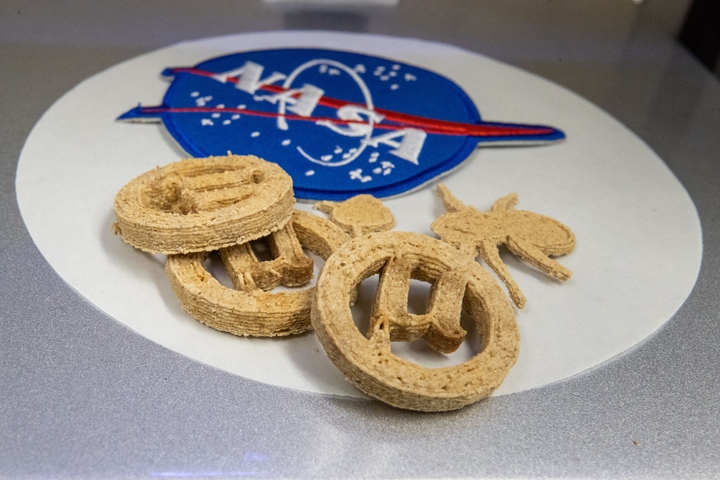 µBites: edible space snacks made from upcycled plastics waste (Photo: Rusty Bailey/SIU Carbondale Communications) |
Working with the US space agency, a research team led by Lahiru Jayakody at Southern Illinois University Carbondale mixed PET, which contains carbon-rich molecules capable of making a form of protein, with discarded corn plant stalks, leaves, and other biomass using a proprietary process called oxidative hydrothermal dissolution (OHD).
This creates microbe-accessible pieces that are fed to a series of yeasts, which transform the pieces into a variety of new food ingredients. The researchers then added fibre, starch, and sweetener to the mix and 3D-printed a batch of protein-rich cookies dubbed µBites (‘microbites’). Sounds yummy.
While the µBites have yet to secure institutional approval to conduct taste tests, NASA wants to harness the potential for using plastics waste to create food during long-duration space expeditions.
It would certainly come in handy when supplies of Leibniz Butterkeks run out in deep space.
28.08.2026 Plasteurope.com [260884-0]
Published on 28.08.2026